What are the details of the collision in Coquelles?
A minibus collided with a departing freight train at the Eurotunnel loading platform in Coquelles, near Calais, at 19:27 local time on Thursday. The vehicle was transporting a group of workers, specifically lorry drivers, who were preparing to board the Le Shuttle rail service. The collision occurred at a critical junction where freight operations are concentrated.
According to Agathe Cury, the local sub-prefect, the scene involved two distinct trains positioned on either side of the platform. One train was in the process of being loaded with heavy goods vehicles (HGVs) for a cross-Channel crossing, while the second train, which had already completed its loading process, was in the act of departing. The minibus struck the moving train during this transition.
While the minibus remained upright and did not overturn, the force of the impact was significant enough to cause injuries to those on board. The driver and one passenger were classified as severely injured and required emergency medical evacuation via helicopter. Local officials have confirmed that while the injuries were serious, none are currently considered life-threatening.
How many people were injured and what is their status?
Nineteen people were injured during the accident, including the minibus driver and 18 passengers. The passengers were described by authorities as men of various nationalities, though it has not yet been confirmed if any British nationals were among the casualties.
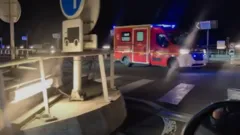
The medical response was immediate, with emergency services concentrating on the specific platform where the collision took place. Eyewitness reports from the scene, including those from BBC journalist Evan Davis, noted a high concentration of emergency vehicles with blue lights at the loading area. The severity of the impact on two individuals necessitated aerial transport to medical facilities.
Nationality and casualty specifics
The identity of the passengers remains a key point of interest for investigators. As the minibus was transporting workers intended for the Le Shuttle service, the demographic was primarily male professionals in the logistics sector. The lack of clarity regarding British nationals reflects the international nature of the workforce operating through the Channel Tunnel. Authorities are working to notify next of kin and clarify the specific nationalities of all 19 individuals involved.
What is the impact on Eurotunnel and Eurostar services?
Rail traffic through the Channel Tunnel experienced only a brief stoppage to facilitate the evacuation of the injured, with no long-term disruption to freight or passenger services reported. Despite the collision, Eurostar and Le Shuttle services managed to maintain their schedules following the initial emergency response.
Eurostar issued an official statement to clarify the scope of the incident, noting that the collision occurred several kilometers away from the actual tunnel transit path. They emphasized that the event did not involve or impact Eurostar trains running between London and various European destinations. Consequently, all Eurostar services continued to operate as expected.
Observations from the scene indicated that while there were queues of cars at the check-in points, the flow of traffic was not halted for an extended period. This suggests that the technical and operational impact on the tunnel's capacity was localized to the Coquelles loading platform rather than the main transit lines.
Why did the collision occur and what is the investigation looking into?
The exact cause of the minibus colliding with the departing train remains unknown at this stage. Local authorities have launched a formal investigation to determine whether mechanical failure, driver error, or platform congestion contributed to the accident.
Agathe Cury noted that this is the first time an incident of this specific nature—a vehicle striking a train on the loading platform—has occurred at the Eurotunnel facility. This historical context suggests that the investigation will likely focus on the safety protocols governing the movement of vehicles and trains within the high-traffic loading zones.
Key investigative factors
- Driver Control: Determining if the minibus driver lost control of the vehicle prior to impact.
- Train Movement: Assessing the timing of the train's departure relative to the movement of service vehicles on the platform.
- Platform Safety Protocols: Reviewing the existing separation measures between passenger vehicles and departing freight trains.
How does the Channel Tunnel infrastructure operate?
The Channel Tunnel serves as a vital sub-sea link between Folkestone in Kent, England, and Coquelles in France. It facilitates three distinct types of rail services that are essential to European logistics and travel.
The three primary services are:
- Eurostar: High-speed passenger trains connecting London to various major European cities.
- Le Shuttle: A vehicle-carrying service that transports cars, motorcycles, and trucks via rail.
- Freight Services: Dedicated trains used for the transport of heavy goods and logistics across the Channel.
The Coquelles terminal acts as the French gateway, managing the complex transition of vehicles from road to rail. The incident highlights the inherent risks involved in the high-density movement of different transport modes within a confined loading environment.
Frequently asked questions
Was the Channel Tunnel closed after the accident?
No, the Channel Tunnel did not close for an extended period. While there was a brief stoppage to allow emergency services to evacuate the injured, both Eurostar passenger services and freight traffic resumed their normal operations shortly thereafter.
Are there any confirmed fatalities from the collision?
There have been no reported fatalities following the collision. Local officials stated that while the driver and one passenger were severely injured and required helicopter evacuation, none of the injuries sustained by the 19 people involved are considered life-threatening.
Which services were directly affected by the crash?
The incident primarily affected the Le Shuttle loading area where the minibus was traveling. However, Eurostar confirmed that their services were not involved in or impacted by the collision and continued to run according to their standard schedules.
What kind of vehicles were involved in the incident?
The collision involved a minibus, which was transporting lorry drivers, and a departing freight train. The minibus was carrying workers who were intended to board the Le Shuttle service at the Coquelles terminal.
Is this a common occurrence at the Eurotunnel?
No, this is not a common occurrence. According to local sub-prefect Agathe Cury, this is the first time an incident involving a vehicle colliding with a train has been recorded on an Eurotunnel loading platform.
Key takeaways
- A minibus collided with a departing freight train in Coquelles, injuring 19 people.
- The driver and one passenger were seriously injured and evacuated by helicopter.
- No life-threatening injuries have been reported by French authorities.
- Eurostar and freight services maintained operations with minimal disruption.
- This is the first recorded collision of this type on the Eurotunnel loading platform.
Conclusion
The collision in Coquelles serves as a significant, albeit non-fatal, incident in the operational history of the Channel Tunnel. While the immediate impact on international rail travel was limited, the injury of 19 individuals underscores the complexities of managing high-density transport interfaces. As the investigation progresses, the focus will remain on identifying the cause of the minibus's impact with the departing freight train. Understanding whether this was a procedural failure or an isolated error will be crucial for maintaining the safety standards of the Eurotunnel's vital cross-border logistics infrastructure.