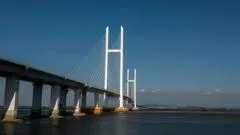
Why was the New Yalu River Bridge delayed?
The New Yalu River Bridge, which was initially slated for completion in 2014, faced significant and indefinite delays that spanned over a decade. These setbacks were largely driven by North Korea's decision to halt the construction of essential supporting infrastructure, specifically its roads and customs facilities. This stoppage occurred during a period when relations between Beijing and Pyongyang had turned frosty.
The delay reflected broader geopolitical tensions. During much of the 2010s, Beijing's patience regarding North Korea's nuclear weapons programme began to wear thin. Following Kim Jong Un's nuclear test in 2017 and subsequent tests of banned ballistic missiles, the regional security environment became increasingly volatile. The bridge, which spans 3km (1.9 miles) from the Chinese border city of Dandong to Sinuiju in North Korea, is now set to become the main land route for trade, finally providing a modern alternative to the decades-old Sino-Korean Friendship Bridge. The latter was built between 1937 and 1943 during the period of Imperial Japan's occupation of the region.
What is the significance of the bridge for China-North Korea relations?
The opening of the New Yalu River Bridge is being framed by Chinese leadership as a major symbolic and practical milestone. Chinese Premier Li Qiang, in a video address on Thursday, described the bridge as a "new landmark symbolising the traditional friendship between China and North Korea," suggesting that the two nations are "opening a new chapter" in their bilateral ties.
This sentiment is echoed by the Chinese Foreign Ministry. Spokesperson Mao Ning stated on Wednesday that the bridge serves as an "important facility for connectivity" that will "further facilitate trade and people-to-people exchanges." The timing is particularly notable following Chinese President Xi Jinping's state visit to Pyongyang in June, which was his first of the year. Leif-Eric Easley, a professor at Ewha University in Seoul, noted that the bridge's opening demonstrates that Xi's visit was more than merely symbolic, signaling a tangible improvement in relations.
Impact on trade and connectivity
While the bridge promises enhanced connectivity, the scale of the economic impact remains subject to significant constraints. Last year, bilateral trade between the two neighbors reached $2.7 billion, a figure that marks a recovery to pre-pandemic levels and is primarily fueled by Chinese exports to North Korea. However, experts caution against expecting a sudden surge in economic activity.
Kang Jun-young, a professor of Chinese studies at the Hankuk University of Foreign Studies, told the BBC that a sharp and sudden increase in trade is "unlikely" because UN sanctions on North Korea remain in effect. Furthermore, there are internal North Korean considerations; Pyongyang remains wary of a sudden flood of Chinese imports that could expand China's influence over its domestic market. Consequently, while the bridge provides the physical means for increased movement, experts believe trade is more likely to grow gradually rather than through an immediate explosion of commerce.
How does the bridge affect regional dynamics?
The inauguration of the bridge occurs against a backdrop of shifting alliances in Northeast Asia. For years, China was overtly critical of North Korea's nuclearisation, frequently calling for denuclearisation. However, the geopolitical landscape has changed. Edward Howell, a lecturer at the University of Oxford, observed to the BBC that while Beijing was critical a decade ago, it is now saying little, if anything, regarding Pyongyang's nuclear activities.
A primary driver of this shift is North Korea's deepening relationship with Russia, exacerbated by the war in Ukraine. Reports suggest that at least 2,300 North Korean soldiers have died fighting for Russia in Ukraine. In exchange for military support, Russia is providing North Korea with oil, in violation of UN sanctions. In 2024, it was estimated that Russia sent more than a billion barrels of oil to Pyongyang as payment for its weapons and troops. This growing Russia-North Korea axis—highlighted by the recent opening of their own road bridge capable of moving 300 vehicles and 2,000 people daily—has prompted Beijing to attempt to reassert its own sway over Pyongyang by rekindling bilateral ties.
China's strategic interests
Beijing's efforts to strengthen its bond with Pyongyang are visible through several recent diplomatic and logistical developments. Beyond the bridge, Air China resumed direct flights between Beijing and Pyongyang in March, ending a six-year hiatus caused by the pandemic. Passenger train services between the two nations were also reopened during the same month.
These moves appear designed to reinforce the long-standing alliance, which is underpinned by a mutual defence treaty—the only one of its kind China holds with any country. The relationship has historically been described as "as close as lips and teeth," a phrase famously used by former Chinese leader Mao Zedong. By investing in infrastructure and restoring transport links, China is working to maintain its position as North Korea's largest trading partner and primary lifeline against international sanctions.
What are the challenges in China-North Korea relations?
Despite the current momentum, the relationship remains complex and prone to friction. The long delay in the bridge's completion serves as a reminder of the difficulties in managing the partnership. Leif-Eric Easley pointed out that North Korea's pandemic-era self-isolation and its domestic socioeconomic crackdowns demonstrate how difficult Pyongyang can be as a partner for Beijing.
The fundamental tension regarding North Korea's nuclear weapons programme continues to loom over the relationship. While China has adopted a more muted stance recently, the underlying issue of North Korea's ballistic missile tests and nuclear capabilities remains a source of international concern and a factor that has historically strained the Sino-Korean bond. The balance between maintaining a stable buffer state and managing the fallout from Pyongyang's nuclear ambitions remains a delicate task for Beijing.
Frequently asked questions
What is the New Yalu River Bridge?
The New Yalu River Bridge is a 3km (1.9 mile) road bridge that connects the Chinese border city of Dandong to Sinuiju in North Korea, intended to serve as a primary land route for trade.
Why was the bridge delayed?
The project, originally planned for 2014, was delayed because North Korea halted the construction of its necessary roads and customs facilities during a period of frosty relations with China.
How does the bridge impact trade?
The bridge will facilitate trade and people-to-people exchanges, but experts believe trade growth will be gradual due to existing UN sanctions and North Korea's desire to limit Chinese influence over its domestic market.
What is the historical context of China-North Korea relations?
The two countries are long-standing allies with a mutual defence treaty, a relationship famously described by Mao Zedong as being "as close as lips and teeth."
How has the regional dynamic shifted recently?
North Korea's growing military and economic ties with Russia, particularly regarding the war in Ukraine, have prompted China to attempt to reassert its influence over Pyongyang through improved connectivity and diplomatic engagement.
Key takeaways
- The New Yalu River Bridge connects Dandong and Sinuiju, enhancing connectivity between China and North Korea.
- The bridge's opening follows a long delay caused by construction halts and strained bilateral relations.
- Trade growth is expected to be gradual due to ongoing UN sanctions and North Korean domestic concerns.
- China is using infrastructure and renewed transport links to reassert influence as North Korea strengthens ties with Russia.
- Despite improved ties, challenges such as North Korea's nuclear programme and its unpredictable nature as a partner remain.