Escalation of violence in Tirana's government district
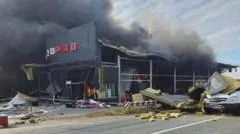
The capital city of Tirana witnessed significant property damage as student protesters in Albania targeted multiple state institutions on Wednesday. Following an initial demonstration outside the ministry of education on Tuesday, the unrest intensified, resulting in part of the education ministry's building being set on fire. The wave of attacks extended beyond the education sector, with the prime minister's office, the finance ministry, and the interior ministry also being targeted by demonstrators.
The unrest was not limited to state buildings; several surrounding businesses were also caught in the fray. According to reports, the violence included protesters throwing rocks at the finance ministry building. This shift from peaceful demonstration to direct confrontation with state infrastructure marks a critical turning point in the current wave of civil disobedience. Riot police have been deployed to manage the crowds, utilizing water cannons and tear gas to disperse the groups and protect government installations.
The core grievances: From education to systemic corruption
While the initial spark for the demonstrations was rooted in student-specific concerns, the movement has rapidly expanded to encompass wider societal frustrations. The protests originally began as a call for improved university conditions and better job prospects for graduates. However, the sentiment on the streets suggests a much deeper resentment toward the national political landscape.
Demonstrators have articulated that their anger is directed at a perceived lack of integrity within the ruling administration. Enida Bimi, a participant in the protests, stated to Reuters that the movement represents all Albanians rather than just students. She noted that the populace is angry at a system characterized by widespread corruption and crime, necessitating a complete overhaul of the current structure. Arber Leshi, another protester, echoed these sentiments, describing the current administration as the most corrupt in the nation's history. This sentiment reflects a growing consensus among the youth that the current political framework is no longer serving the public interest.
Government response and political polarization
The Albanian government has responded with a mixture of calls for restraint and condemnation of the violent tactics used by some participants. Officials have attempted to draw a clear line between the right to civic expression and the destruction of public property. Education Minister Mirela Kumbaro acknowledged the legitimacy of the right to protest but emphasized that violence against public buildings constitutes a separate and unacceptable action.
Economic Minister Delina Ibrahimaj further criticized the tactics, noting that setting fire to institutions endangers human lives and moves beyond the realm of peaceful protest. In an effort to maintain order, authorities have already conducted arrests; Albania's state-run news agency reported that sixteen individuals were detained in connection with violent acts during the Tuesday protests. Deputy Prime Minister Albana Koçiu has urged the public to exercise maturity and self-restraint, stating that the country should not have to burn in order to achieve change.
However, the political divide remains stark. Sali Berisha, leader of the opposition Democratic Party of Albania, has offered vocal support for the demonstrators. Speaking at an evening meeting on Wednesday, Berisha praised the courage of the students, comparing them to lions in the streets of Tirana. This support from the opposition highlights the deep polarization currently defining Albanian politics.
The Flamingo Revolution and the path to resignation
The current unrest is an intensification of the "Flamingo Revolution," a series of anti-government protests that have persisted for months. The central demand of this movement is the resignation of Prime Minister Edi Rama. The movement gained significant momentum following controversies surrounding a luxury tourism project linked to Jared Kushner, the son-in-law of Donald Trump.
This specific project served as a catalyst for public anger, fueling allegations of corruption and a profound lack of transparency within the Rama administration. The intersection of international business interests and domestic policy has become a flashpoint for citizens who feel the government is prioritizing opaque deals over national integrity. As the student-led protests continue to merge with the broader Flamingo Revolution, the pressure on the Prime Minister's office to address these systemic grievances—or face total instability—continues to mount.
Frequently Asked Questions
What triggered the recent student protests in Albania?
The protests were initially sparked by students demanding better university conditions and improved job prospects for graduates. However, the movement quickly expanded into a broader anti-government uprising, fueled by anger over systemic corruption and a lack of transparency regarding government projects and national governance.
What is the Flamingo Revolution?
The Flamingo Revolution refers to the months of ongoing anti-government demonstrations in Albania. The movement specifically calls for the resignation of Prime Minister Edi Rama, driven by public dissatisfaction with corruption and specific controversial projects, such as a luxury tourism development linked to Jared Kushner.
How has the Albanian government reacted to the violence?
The government has condemned the destruction of public property, with officials distinguishing between peaceful protest and violent acts. While calling for calm and maturity, authorities have also used riot police, tear gas, and water cannons to disperse crowds, resulting in multiple arrests for violent conduct.
Conclusion
The recent violence in Tirana underscores a period of profound instability for Albania. What began as a localized demand for educational reform has evolved into a significant challenge to the authority of Prime Minister Edi Rama. The convergence of student activism with the broader Flamingo Revolution highlights a deep-seated public demand for systemic change and transparency. As the government attempts to balance the right to protest with the need for public order, the tension between the ruling administration and a disillusioned populace appears set to intensify, leaving the future of Albania's political landscape in a state of flux.