Why did Russia accuse Ukraine of attacking the refinery?
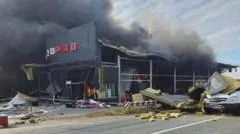
The Kremlin has accused Kyiv of attempting a "large-scale attack" on a refinery located south of Moscow early on Thursday. According to the Russian defence ministry, the attempt involved four missiles and dozens of drones. While the Russian military claims these projectiles were intercepted, they stated that the falling debris caused a fire at the site in Ryazan.
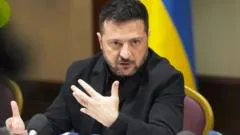
This escalation follows a period of relative restraint from Ukraine. President Zelensky had previously indicated he would agree to an "energy ceasefire"—an arrangement announced by US President Donald Trump on Sunday—provided that Moscow also adhered to the terms. However, Zelensky accused Russia of ignoring the proposed deal almost immediately after its announcement. He noted that Russian strikes continued to hit Ukrainian energy infrastructure, leaving hundreds of thousands of citizens without power. Consequently, Zelensky told the Financial Times, "We're done," signaling the end of the temporary pause in strikes against Russian energy targets.
What is the significance of Starlink in the conflict?
Starlink internet services have become a cornerstone of Ukraine's modern battlefield operations. The satellite network is used extensively to guide drones and protect Ukrainian skies, providing the connectivity necessary for high-tech warfare. Specifically, the military utilizes "operation while on the move," a feature of the Starshield service provided under a US defence department contract, to maintain communications in mobile combat environments.
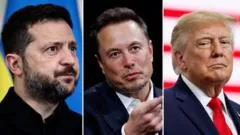
The reliability of this service was recently called into question. Following sudden restrictions on Tuesday evening, there were suggestions of a technical glitch, but Elon Musk appeared to deny this, suggesting the move was driven by political will. Zelensky confirmed this sentiment, telling the Financial Times, "It was not a technical problem, it was the will." While Ukrainian defence sources later reported that some Starshield functionality had resumed, it remains unclear if the restrictions on the speed at which drones can fly while maintaining a connection have been fully lifted. Officials are still working to clarify the specific reasons and circumstances behind these service changes.
How have US-Ukraine relations been affected?
Relations between Kyiv and Washington have reached a point of significant friction. Zelensky expressed a profound sense of betrayal during an interview with Piers Morgan, following reports that the US had withdrawn key elements of its support. Specifically, Zelensky told the Financial Times that Ukrainian officials were informed by US counterparts that intelligence-sharing would be blocked if Ukraine did not cease its strikes on Russian infrastructure.
This intelligence-sharing is critical; Ukraine relies on US early-warning alerts to mount effective air defences against incoming Russian aerial attacks. Without this data, the success of Ukrainian defensive measures is severely limited. Zelensky has taken a more defiant tone regarding this rift, suggesting that his American counterpart has an affinity for autocratic leaders like Vladimir Putin. He added that it was not his responsibility to mend the relationship, stating, "We didn't destroy any relationship."
The tension is further complicated by recent US-Russia agreements. Zelensky criticized a deal struck last week between the US and Russia to release 300,000 tonnes of diesel to the global marketplace, arguing that the US is effectively investing in Russia's war effort. This deal was part of President Trump's effort to lower fuel prices in the US following the economic consequences of the Iran war, but Zelensky warned that such deals might extend to other commodities: "The question will be: when will the next deal be? Maybe it will be gas. Definitely it will be gas."
What are the geopolitical implications of the refinery attack?
The decision to target Russian oil infrastructure is a strategic move intended to cut off the revenue streams that fund Russia's military operations. Zelensky has made it clear that the resumption of these strikes is conditional. He stated he would only halt attacks on Russian energy targets if the US provides more Patriot air defence missiles. Ukraine has faced a persistent shortage of these US-made systems since the outbreak of the Iran war began consuming existing stockpiles.
The international community's reaction has been mixed. While European leaders have rallied around Zelensky, there is growing concern regarding the impact of US policy shifts. During a two-day summit of European leaders in Brussels, Zelensky met with Nato chief Mark Rutte to discuss the importance of the energy ceasefire and the necessity of continuous support from Nato allies.
What are the potential consequences of the US's actions?
The potential withdrawal or restriction of US resources has sparked alarm among European allies. Italy's Defence Minister, Guido Crosetto, described the restriction of intelligence-sharing as a "complete mistake," arguing that it denies a country the fundamental chance to defend itself. Crosetto warned that peace can only be achieved when Vladimir Putin is convinced of a stalemate and realizes he cannot advance.
The concern is that if the United States withdraws resources, it will signal weakness on the Ukrainian front. According to Crosetto, if Putin perceives this weakness, he will conclude that he can win, thereby incentivizing him to continue the war rather than seek a resolution. This highlights the high stakes of the current diplomatic and military maneuvering between Washington, Kyiv, and Moscow.
What is the current state of the conflict?
The conflict remains highly volatile, characterized by intense aerial warfare and strikes on critical infrastructure on both sides. While Ukraine focuses on disrupting Russian revenue through energy strikes, Russia continues to target Ukrainian cities and energy grids. Recent reports indicate that dozens of Ukrainian cities have come under Russian attack in a single day.
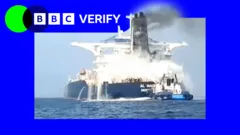
In addition to the direct combat between the two nations, the conflict is impacting broader maritime security. Moscow recently claimed to have hit two cargo ships carrying military cargo destined for Ukraine's Odesa port. Meanwhile, a drone attack off the coast of Romania has left seven people missing after setting a chemical tanker on fire, illustrating the spillover effects of the regional instability.
Frequently asked questions
What was the outcome of the alleged refinery attack?
Russia's defence ministry claimed that four missiles and dozens of drones were intercepted during the attempt on the Ryazan refinery, though the falling debris caused a fire at the site.
Why did Ukraine resume strikes on Russian infrastructure?
President Zelensky decided to resume strikes to target the revenue streams supporting Russia's war machine, following what he described as Russia's failure to abide by the proposed energy ceasefire.
How has the US responded to the situation?
While President Trump has denied halting intelligence-sharing, Zelensky has accused the US of using the withdrawal of intelligence and Starlink functionality as pressure to force Ukraine to stop its strikes.
What role does Starlink play in Ukraine's military operations?
Starlink and its military-grade sister service, Starshield, are used to guide drones, provide communications for troops on the move, and assist in protecting Ukrainian airspace.
What are the implications of the US's actions on the conflict?
European leaders warn that restricting intelligence and support could signal weakness to Putin, potentially emboldening Russia to continue the war rather than seek a stalemate.
Key takeaways
- Russia reported an intercepted drone and missile attack on a refinery in Ryazan.
- President Zelensky has ended the temporary halt on strikes against Russian oil infrastructure.
- Ukraine is seeking more Patriot air defence missiles as a condition for halting energy strikes.
- Tensions between the US and Ukraine have escalated over alleged intelligence-sharing restrictions.
- European leaders have expressed concern that reduced US support could embolden Russia.