Why are Katie Zacharia's legal credentials being questioned?
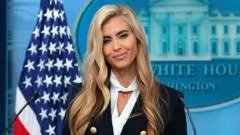
The controversy stems from a discrepancy between the official introduction of the new White House press secretary and her actual professional licensure status. During her appointment announcement last week, President Donald Trump identified Zacharia as an attorney. Furthermore, Zacharia has frequently referred to herself using this title in public forums.
The scrutiny intensified on Tuesday when a reporter asked Zacharia which US state she had passed the bar exam for. Her response, "When I moved to China," raised immediate questions regarding her eligibility to practice law. While she holds a law degree from Pepperdine University, a degree alone does not grant the right to practice law in the United States. Current records indicate she is not registered with the bar in any state where she has resided.
In response to the mounting pressure, White House communications director Steven Cheung defended her appointment, stating that Zacharia is "uniquely qualified and whip smart to help inform the American people." Zacharia herself issued a statement asserting that she practiced "international transaction law, with all the appropriate credentials."
What is the status of the investigation by the Campaign for Accountability?
A formal complaint has been lodged by the watchdog group Campaign for Accountability with the California State Bar Association. The group is seeking a full investigation into whether Zacharia's public statements constitute a violation of legal standards.
The core of the complaint focuses on whether Zacharia repeatedly held herself out to the public as being entitled to practice law without the necessary license. According to the group, such conduct may be treated as a crime under California law. The investigation will likely scrutinize her use of the terms "lawyer" and "attorney" in professional and media contexts.
The distinction between lawyer and attorney
The legal distinction between these terms is central to the defense offered by Zacharia. In an interview with the New York Times on Wednesday, Zacharia explained that she sought guidance from Pepperdine University when she first began appearing on cable news. She stated that the university president advised her that she could identify as a "lawyer" but cautioned against using the term "attorney." This nuance is a critical component of her attempt to reconcile her academic background with her lack of professional licensure.
How did Zacharia's professional history in China contribute to the debate?
Zacharia's tenure in Beijing has become a focal point for critics questioning her claims of practicing international transaction law. Her LinkedIn profile indicates she served as an associate at Zhong Lun Law Firm in Beijing from 2011 to 2013.
However, legal regulations in China present a significant hurdle to her claims. In Beijing, only Chinese citizens are eligible to obtain a license to practice law. Foreign nationals may work within law firms, but they are generally restricted to other professional roles rather than practicing as licensed attorneys. This regulatory reality complicates her assertion that she practiced law with "all the appropriate credentials" during her time abroad.
Furthermore, Zacharia previously claimed on the conservative radio program The Clay Travis and Buck Sexton Show in February of last year that she had worked as outside counsel for the International Finance Corporation (IFC) and the World Bank. While the World Bank Group does occasionally retain outside law firms, the specific roles of individual lawyers within those firms are determined by the firms themselves, leaving the extent of Zacharia's direct involvement as "outside counsel" unverified.
What are the facts regarding her California bar exam attempt?
According to reports from the Wall Street Journal, Zacharia attempted the California bar exam following her graduation from Pepperdine University in 2011 but did not pass. The California bar exam is widely recognized as one of the most difficult professional examinations in the United States.
Zacharia has offered a different explanation for her confusing response to the reporter regarding the bar exam. She told the New York Times that her answer of "When I moved to China" was a misunderstanding caused by the ambient noise of Marine One. She claimed she believed the reporter was asking, "Where were you after law school?" rather than asking which state she had passed the bar in.
Sources with direct knowledge of the period suggest that her attempt to take the exam coincided with significant personal transitions. At the time, Zacharia was reportedly preparing for her wedding and planning a relocation to China to join her then-fiancé, who worked for an American private equity firm in Beijing.
Key takeaways
- President Trump introduced Katie Zacharia as an attorney, despite her not being registered with a state bar.
- The Campaign for Accountability has filed a complaint with the California State Bar Association regarding her claims.
- Zacharia holds a law degree from Pepperdine University but did not pass the California bar exam.
- Legal regulations in China generally prohibit foreign nationals from holding licenses to practice law.
- Zacharia attributes her confusing press remarks to a misunderstanding of the reporter's question.
FAQ: Katie Zacharia legal credentials
Does having a law degree mean you can practice law?
No, a law degree from a university like Pepperdine is an academic qualification but does not grant a license to practice. To practice law in the US, an individual must typically pass a state bar exam and be admitted to the bar of a specific jurisdiction.
Why is the California State Bar involved?
The California State Bar is involved because the Campaign for Accountability filed a formal complaint. They are requesting an investigation into whether Zacharia's public claims of being a lawyer or attorney violate California laws regarding the unauthorized practice of law.
Can foreigners practice law in China?
In China, the legal framework dictates that only Chinese citizens are eligible to obtain a license to practice law. While foreign professionals can be employed by Chinese law firms, they typically serve in non-practicing or support capacities rather than as licensed attorneys.
What was Zacharia's explanation for the bar exam confusion?
Zacharia stated that her response to the reporter was a misunderstanding. She claimed that due to the noise from Marine One, she thought the reporter asked where she was located after law school, rather than asking which state she had passed the bar exam in.
What role did she play in Beijing?
Zacharia's LinkedIn profile states she was an associate at Zhong Lun Law Firm from 2011 to 2013. She has described her work there as involving international transaction law, though her specific legal authority in that role remains a point of contention.
Conclusion
The controversy surrounding Katie Zacharia highlights the tension between academic legal training and professional licensure. While she maintains that her background in international transaction law and her guidance from Pepperdine University justify her professional identity, the formal complaint by the Campaign for Accountability introduces significant legal risks. As the California State Bar Association reviews the allegations, the distinction between her role as a political strategist and her claims of being an attorney remains at the center of the debate. The outcome of this investigation could have implications for how White House officials represent their professional credentials to the public.