Why does social media drive a drift towards extremism?
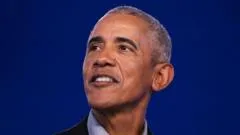
Social media platforms are currently designed in ways that prioritise emotional volatility, specifically targeting the more primal aspects of human psychology. During his address in Glasgow, Barack Obama noted that the digital landscape has shifted from a tool of democratic mobilisation to one that frequently stokes resentment and fear.
The former president explained that the architecture of modern information sharing is often at odds with rational discourse. He suggested that human biology plays a significant role in how digital content is consumed and spread. According to Obama, the "reptilian side" of the human brain is naturally drawn to content that evokes anger, fear, and a sense of being victimised.
This psychological vulnerability is exploited by algorithms that favour engagement, often resulting in a feedback loop of negativity. While these technologies were once viewed as beacons of hope during his 2008 campaign, they have evolved into dual-use tools. They possess the capacity to connect people for humanitarian causes, but they are equally effective at facilitating the spread of hate and division.
The psychological mechanism of digital anger
The core of the issue lies in the mismatch between evolutionary biology and modern algorithmic delivery. When platforms prioritise content that triggers a survivalist response—such as outrage or perceived threats—they create an environment where nuance is lost. This environment makes it increasingly difficult for citizens to engage in the calm, deliberative processes required for a healthy democracy.
How does AI threaten the future of democratic functions?
Artificial Intelligence represents the next major frontier in the struggle against misinformation and political stability. Obama expressed significant concern that the rise of AI will make it increasingly difficult for the public to distinguish between authentic information and fabricated content, a distinction that is fundamental to the functioning of democratic institutions.
The ability to generate highly convincing, yet entirely false, narratives at scale creates a landscape where "basic facts" become elusive. If a society cannot agree on a shared reality, the mechanisms of debate and disagreement—which are essential for governance—begin to break down. Obama warned that this technological evolution could make democracy increasingly difficult to maintain if new institutions are not established to manage the influx of synthetic information.
What is the role of regulation in preventing misinformation?
Effective regulation is necessary to hold information providers accountable, provided a critical balance is maintained with the right to free speech. Obama pointed to historical precedents, such as the post-World War II era, where governments recognised the need to establish rules to prevent the devastating effects of propaganda.
He noted that after the atrocities committed by regimes like Hitler's, there was a global understanding of how misinformation could be used to incite violence and distort reality. However, he observed that modern democratic societies have not yet fully committed to implementing similar safeguards for the digital age. The challenge lies in creating mechanisms that allow for rigorous political disagreement without permitting the unchecked spread of lies that lead to physical violence.
Striking the balance between speech and safety
The debate over digital regulation is often framed as a binary choice between absolute free speech and heavy-handed censorship. Obama suggested that the goal should instead be the creation of "new institutions" capable of facilitating healthy debate while providing tools to help the public sort through falsehoods. This requires a sophisticated approach that addresses the source of the problem—the information diet—rather than just the symptoms.
Why is political polarisation rising in the modern era?
The rise of populism and extreme political polarisation is directly linked to the daily "information diet" consumed by the public. Obama suggested that the current state of political discourse is a result of the constant influx of inflammatory content into the human brain, which he described as an unhealthy diet for cognitive health.
This constant exposure to divisive rhetoric has profound consequences for the next generation. He noted that young people, in particular, are feeling discouraged by the current political climate. The result is a fragmented society where different groups operate under entirely different sets of perceived truths, making compromise and collective action nearly impossible.
Can hope counteract the trend toward extremism?
Despite the gravity of these challenges, Obama maintained that a drift toward extremism is "not inevitable" and that hope remains a vital, active choice. He argued that the tendency of humanity to forget historical lessons—such as the danger of using dehumanising language against minorities—must be countered by an intentional commitment to justice and tolerance.
He described hope not as a passive feeling, but as a "theological" decision to believe that change is possible and worth pursuing. By choosing to act on the belief that the world can be improved, individuals can resist the gravitational pull of cynicism and extremism. Obama concluded that while the challenges are significant, the effort to build a better world remains a necessary and worthwhile struggle.
FAQ: Barack Obama's warnings on extremism
Is the drift towards extremism inevitable?
No, Barack Obama stated that the drift towards extremism is not an inevitable outcome. While he acknowledged the severe pressures exerted by social media and AI, he argued that through new institutions and better regulatory frameworks, society can still steer towards more stable and democratic outcomes.
How does social media impact our psychology?
Social media platforms often exploit the "reptilian" part of the human brain by prioritising content that triggers anger, fear, and resentment. This focus on high-arousal, negative emotions encourages the rapid spread of misinformation and contributes to deep social and political polarisation.
What risks does AI pose to democracy?
Artificial Intelligence poses a risk by making it increasingly difficult for citizens to distinguish between truth and falsehood. This erosion of a shared factual reality can undermine the ability of democratic institutions to function, as rigorous debate becomes impossible without a common understanding of facts.
What did Obama say about political regulation?
Obama argued that while there must be a balance with free speech, there is a need for rules to hold entities responsible for misinformation. He cited post-WWII governance as an example of how societies can create rules to prevent the kind of propaganda that incites violence.
Why do people forget the lessons of history?
Obama suggested that humanity often falls into a cycle of taking progress for granted. This can lead to the normalization of divisive or hateful language in public discourse, as people forget the historical consequences of dehumanising certain groups of people.
Key takeaways
- Social media algorithms often exploit human biology by prioritising content that triggers anger and fear.
- The rise of AI threatens democracy by making it harder to distinguish between truth and misinformation.
- Barack Obama argues that a drift towards extremism is not an inevitable outcome for society.
- Effective digital regulation must strike a balance between protecting free speech and preventing incitement.
- Hope should be viewed as an active, intentional choice to work toward positive social change.
Conclusion
Barack Obama's address in Glasgow serves as a stark warning about the intersection of technology and human psychology. By highlighting how social media and artificial intelligence can distort reality and fuel polarisation, he underscores the fragility of modern democratic structures. However, his message is not one of pure pessimism. By framing the fight against extremism as a matter of institutional design and individual choice, he suggests that the path to stability remains open. The challenge for future leaders lies in building the frameworks necessary to protect truth and foster a more constructive global discourse.